Anthropic Academy Courses My Profile Sign Out

Что такое платформа Claude?

Платформа Claude — это инфраструктура компании Anthropic для программного взаимодействия с Claude. Вместо общения с Claude через браузер вы отправляете структурированные запросы из своего кода и получаете структурированные ответы, контролируя все детали: выбор модели, количество токенов, доступные инструменты и системные инструкции.

Конкретно платформа состоит из нескольких компонентов:

  • REST API, который можно вызывать на любом языке программирования
  • SDK для различных языков программирования
  • Интерфейсы командной строки
  • Консоль для управления API-ключами, мониторинга использования, развёртывания управляемых агентов и тестирования промтов

Три уровня платформы

Платформу удобно представлять как три слоя, расположенных друг над другом.

  • Примитивы — строительные блоки API, оптимизированные под Claude. Это Messages API, использование инструментов, работа с файлами, веб-поиск, выполнение кода, серверы MCP и навыки. Это те элементы, которые вы вызываете из своего кода.
  • Инфраструктура — то, что необходимо для создания и масштабирования агентных систем за рамками прототипа. Управляемые агенты, повторные попытки, очереди, наблюдаемость — это инфраструктура, которая поддерживает работу, когда один вызов Claude превращается в тысячу.
  • Управление — инструменты для запуска систем в производственной среде, такие как панели мониторинга и оценки. Это те рычаги, которые использует ваша команда после выхода в продакшн.

Кратко: разрабатывайте с примитивами, масштабируйте на инфраструктуре, управляйте с помощью контроля.

Эту структуру можно увидеть и в самой консоли Claude — здесь находятся уровни инфраструктуры и управления, а также разделы для разработки, управления агентами и аналитики.

Реальный пример: черновики ответов службы поддержки

Предположим, вы управляете простым приложением службы поддержки, и вас попросили добавить функцию: составлять ответ на основе содержимого обращения, сохраняя стиль и рекомендации вашей команды. Вы хотите подключить эту функцию к кнопке в интерфейсе.

Это идеальный случай для использования Messages API. Процесс выглядит так:

  • Определите клиент
  • Получите обращение, на которое ссылается чат
  • Вызовите messages.create
  • Верните ответ кнопке для отображения

```python

client = anthropic.Anthropic()

response = client.messages.create(

model="claude-haiku-4-5", # Haiku: подходящая модель для простого составления черновиков

max_tokens=1024,

system=TONE_AND_GUIDELINES,

messages=[

],

)

draft = response.content

```

Каждый параметр выполняет свою задачу:

  • model — какая модель обрабатывает запрос. Здесь используется Haiku, так как составление ответа — простая задача.
  • max_tokens — ограничивает длину ответа Claude.
  • system — системный промт, где вы задаёте роль Claude. Здесь прописываются стиль и рекомендации.
  • messages — массив объектов. Роль user указывает, что это входные данные пользователя; туда помещается содержимое обращения.

Затем вы получаете ответ и возвращаете его кнопке для отображения. Готово.

От «задайте вопрос Claude» до «Claude — часть моего продукта»

Обратите внимание, что произошло в этом примере: вы не создаёте чат-бота с нуля. Вы добавляете Claude в уже существующий продукт, а API — это способ его интеграции.

В этом и заключается основная идея. Платформа Claude — это ваш программный доступ к моделям, инструментам и инфраструктуре Claude. Это путь от «задайте вопрос Claude» до «Claude — часть моего продукта».

А когда вашему продукту нужны агенты, платформа не просто предоставляет модель. С помощью управляемых агентов она запускает их за вас.

Итоги

  • Платформа Claude — это инфраструктура компании Anthropic для программного взаимодействия с Claude: REST API, SDK, CLI и консоль для управления ключами, мониторинга использования, управляемых агентов и тестирования промтов.
  • Её можно представить как три уровня: примитивы (Messages API, использование инструментов, работа с файлами, веб-поиск, выполнение кода, серверы MCP и навыки), инфраструктура (управляемые агенты, повторные попытки, очереди, наблюдаемость) и управление (панели мониторинга, оценки).
  • Кратко: разрабатывайте с примитивами, масштабируйте на инфраструктуре, управляйте с помощью контроля.
  • Один вызов messages.create даёт вам полный контроль над моделью, длиной ответа, системным промтом и входными данными пользователя — этого достаточно, чтобы интегрировать Claude в существующую функцию, например, для составления черновиков ответов службы поддержки.
  • Платформа позволяет перейти от «задавать вопросы Claude» к «делать Claude частью вашего продукта» — а с управляемыми агентами она может запускать ваших агентов за вас.

The Claude Platform is Anthropic's infrastructure for building with Claude programmatically. Instead of chatting with Claude in a browser, you send structured requests from your code and get structured responses back, with control over every detail: which model to use, how many tokens to spend, what tools Claude can use, and what system instructions it follows.

Concretely, the platform is made up of a few pieces:

  • A REST API you can call from any language
  • SDKs for different programming languages
  • Command line interfaces
  • A console where you manage API keys, monitor usage, deploy managed agents, and test prompts

The three layers of the platform

A useful way to picture the platform is as three layers stacked on top of each other.

  1. Primitives — the API building blocks tuned to Claude. This is the Messages API, tool use, files, web search, code execution, MCP servers, and skills. These are the pieces you actually call from your code.
  2. Infrastructure — what you need to build and scale agentic systems past a prototype. Managed agents, retries, queues, observability — the plumbing that keeps things running when one Claude call becomes a thousand.
  3. Controls — the tools for running those systems in production, like dashboards and evals. These are the dials your team uses once it's live.
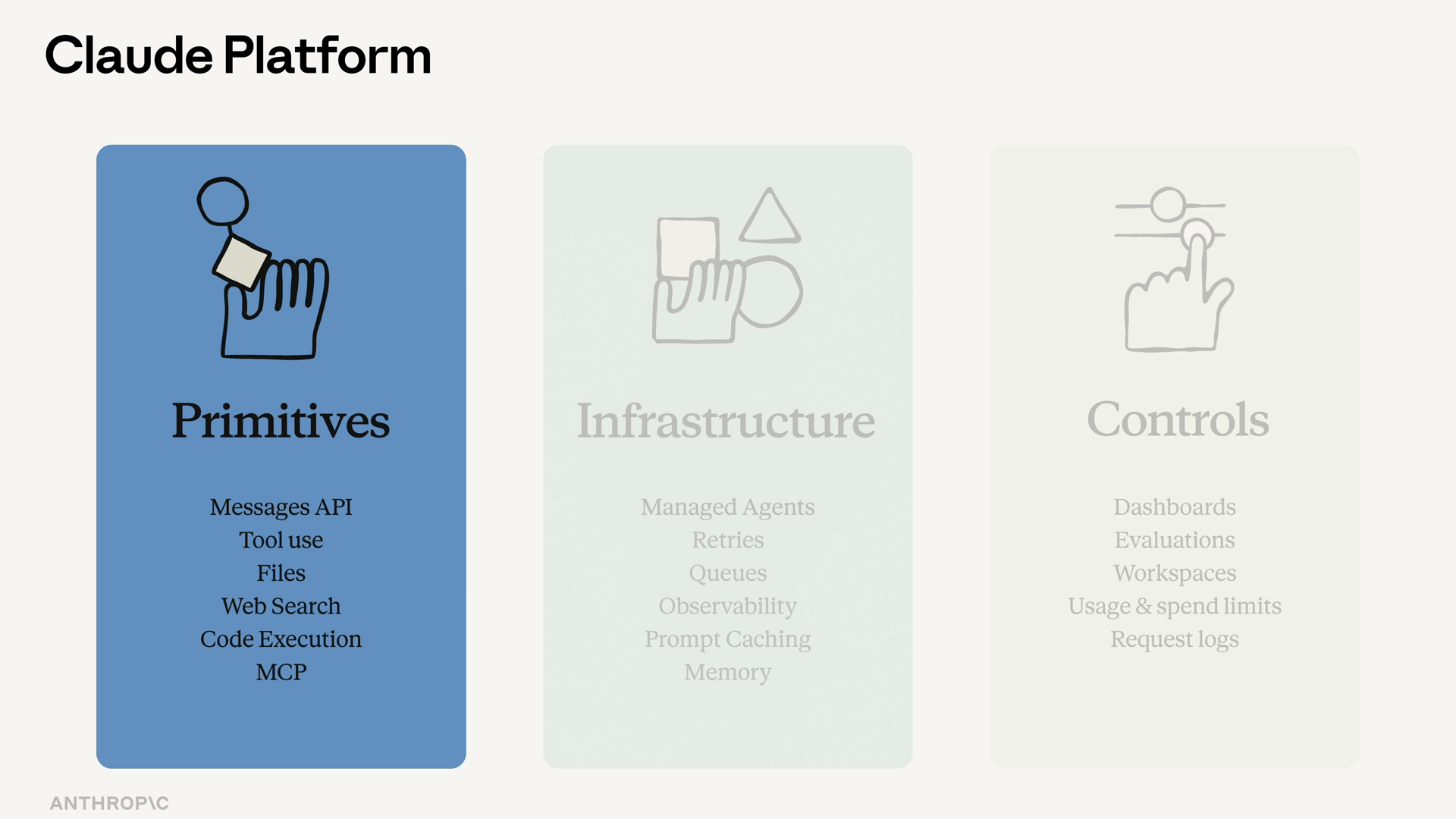
Diagram of the Claude Platform's three layers: Primitives (Messages API, tool use, files, web search, code execution, MCP), Infrastructure (managed agents, retries, queues, observability, prompt caching, memory), and Controls (dashboards, evaluations, workspaces, usage and spend limits, request logs)

The shorthand: build with primitives, scale on infrastructure, run with control.

You can see this structure reflected in the Claude Console itself — it's where the infrastructure and control layers live, with sections for building, managing agents, and analytics.

A real example: drafting help desk replies

Say you manage a basic help desk app, and you've been asked to add a feature: draft a reply based on the contents of a ticket, following your team's tone and guidelines. You want to wire this up to a button in the UI.
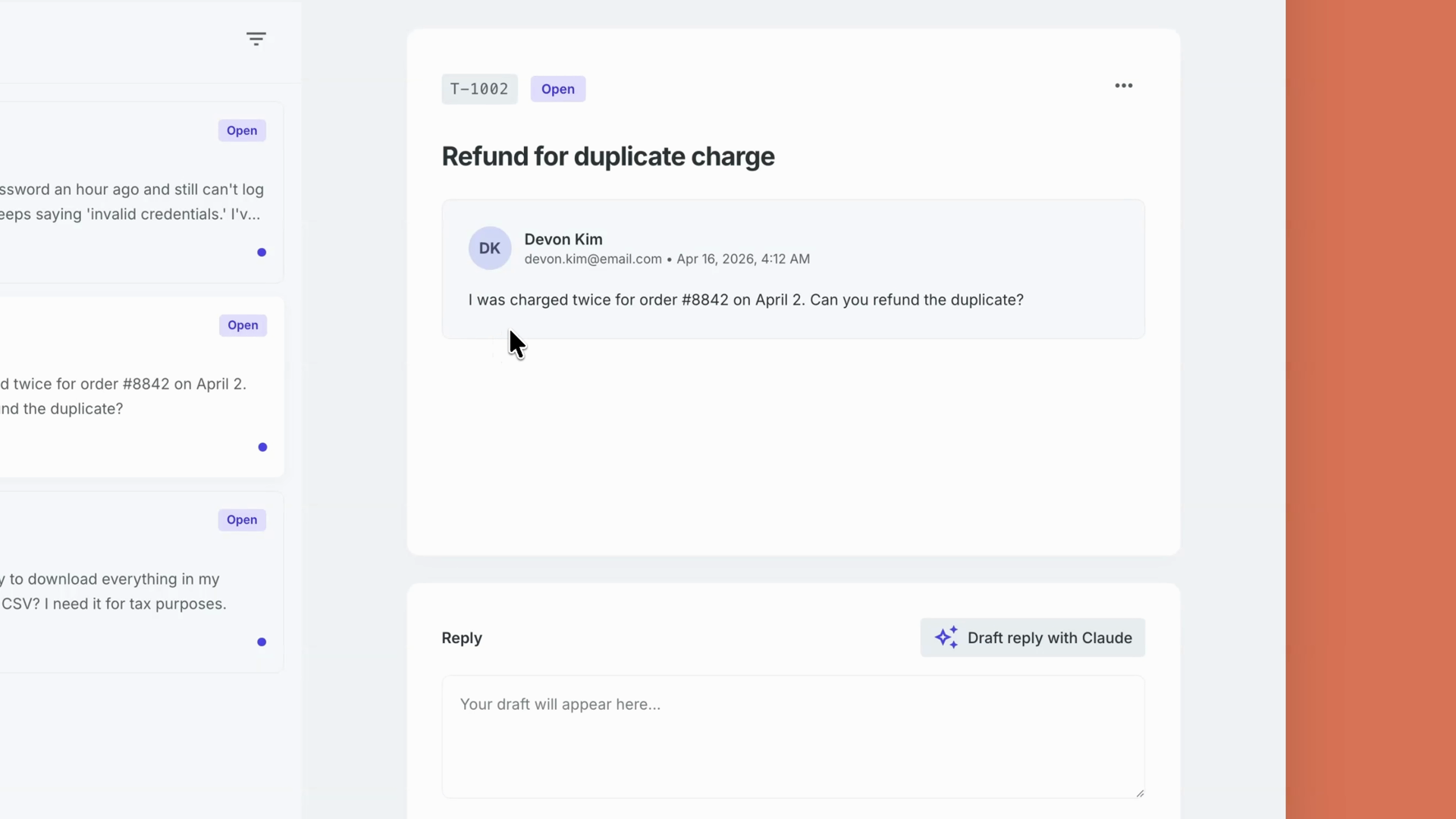
A help desk app showing an open support ticket about a duplicate charge, with a Draft reply with Claude button above an empty reply box

This is a perfect use case for the Messages API. The flow looks like this:

  1. Define a client
  2. Retrieve the ticket the chat refers to
  3. Call messages.create
  4. Return the response to the button to render
client = anthropic.Anthropic()

response = client.messages.create(
    model="claude-haiku-4-5",   # Haiku: a good fit for a simple drafting task
    max_tokens=1024,
    system=TONE_AND_GUIDELINES,
    messages=[
        {"role": "user", "content": ticket_content}
    ],
)

draft = response.content

Each parameter does a specific job:

  • model — which model handles the request. Here that's Haiku, since drafting a reply is a simple task.
  • max_tokens — caps how long Claude's response can be.
  • system — the system prompt, where you define the role Claude plays. The relevant tone and guidelines go here.
  • messages — an array of objects. The user role tells Claude this is user input; the ticket content goes there.

Then you retrieve the response and return it to the button to render. Done.
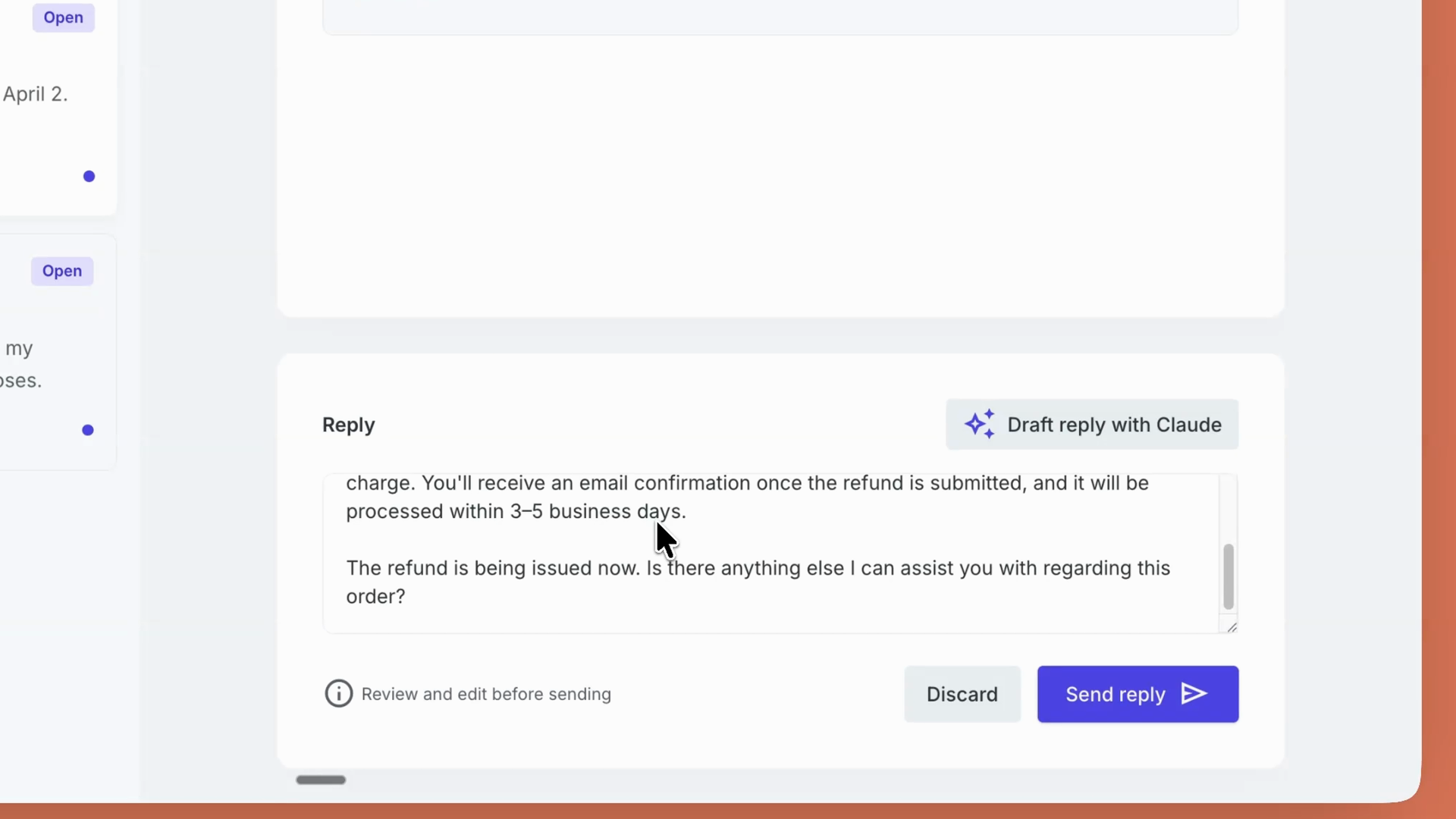
The help desk app's reply box populated with a Claude-drafted refund response, with Discard and Send reply buttons and a note to review and edit before sending

From "ask Claude a question" to "Claude is part of my product"

Notice what happened in that example: you're not building a chatbot from scratch. You're adding Claude into a product that already exists, and the API is how you wire it in.

That's the core idea. The Claude Platform is your API-level access to Claude's models, tools, and infrastructure. It's how you go from ask Claude a question to Claude is part of my product.

And when your product needs agents, the platform doesn't just hand you the model. With managed agents, it runs them for you.

Recap

  • The Claude Platform is Anthropic's infrastructure for building with Claude programmatically: a REST API, SDKs, CLIs, and a console for keys, usage, managed agents, and prompt testing.
  • Think of it as three layers: primitives (Messages API, tool use, files, web search, code execution, MCP servers, skills), infrastructure (managed agents, retries, queues, observability), and controls (dashboards, evals).
  • The shorthand: build with primitives, scale on infrastructure, run with control.
  • A single messages.create call gives you full control over the model, response length, system prompt, and user input — enough to wire Claude into an existing feature like drafting help desk replies.
  • The platform takes you from asking Claude questions to making Claude part of your product — and with managed agents, it can run your agents for you.